Post Hole Concrete Calculator
Tell us the hole diameter, depth and how many posts you're setting. We work out the concrete volume and convert it to bags using published manufacturer yields.
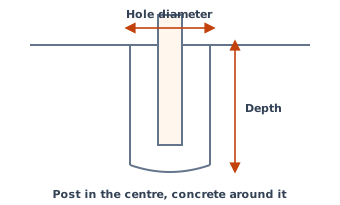
How post hole concrete is calculated
A post hole is a cylinder: volume = π × (diameter ÷ 2)² × depth. A 12 in wide, 36 in deep hole is π × 0.5² × 3 = about 2.36 cu ft. Multiply by the number of holes, add a waste allowance for holes that bell out at the bottom, and divide by the yield of your bag size.
If a post will sit in the hole, select it above and the calculator subtracts the concrete the buried post itself displaces (a 4x4 in a 12 in hole displaces about 11% of the hole's volume). Most calculators ignore this and quietly over-sell you concrete; the worked examples on this page are figured with the hole empty.
Bag yields are the manufacturers' published figures. Quikrete and Sakrete publish the same yields, and the 50 lb figure is Quikrete's: an 80 lb bag makes 0.60 cu ft, a 60 lb bag 0.45, a 50 lb bag 0.375 and a 40 lb bag 0.30 cu ft of placed concrete.
Two field rules worth knowing: dig the hole about three times the post's width (a 4×4 post wants roughly a 12 in hole), and set the depth below your local frost line. A third of the post in the ground is the usual starting point. The Concrete Bag Calculator handles flat pours like slabs and patios. Setting the posts for a fence run? The Fence Calculator counts the posts, rails and pickets.
Sources
The figures behind this calculator come from published manufacturer data and industry standards:
Worked examples
9 fence posts, 12 in × 36 in holes
2.36 cu ft per hole = 21.2 cu ft total, +10% waste, 60 lb bags at 0.45 cu ft.
Buy 52 × 60 lb bags
1 deck footing, 18 in × 42 in hole
6.19 cu ft, +10% waste, 80 lb bags at 0.60 cu ft.
Buy 12 × 80 lb bags
6 mailbox/gate posts, 10 in × 30 in
1.36 cu ft per hole = 8.2 cu ft total, +10% waste, 50 lb bags.
Buy 24 × 50 lb bags
Frequently asked questions
How many bags of concrete do I need for a post hole?
Does the post itself reduce the concrete I need?
How wide should a post hole be?
Can I just pour dry mix into the hole and add water?
How deep should post holes be?
Related calculators
Concrete Bag Calculator
How many 40, 60 or 80 lb bags of concrete you need, and what they'll cost.
Concrete Slab Calculator
Cubic yards of ready-mix for a slab, plus the bag count if you mix it yourself.
Concrete Volume Calculator
Cubic yards and cubic feet for any pour shape.
Concrete Block (CMU) Calculator
Blocks and mortar bags for a block wall.
Estimate disclaimer: results are planning estimates based on standard manufacturer yields and coverage figures. Site conditions, product choice and installation method change actual quantities. Verify before you buy, and follow local building code for structural work. This tool does not replace professional engineering advice.
Use this calculator on your own site
Free to embed. Paste this code where you want the calculator to appear. It carries a small "by Figure My Build" credit link, which is all we ask.