Grout Calculator
Grout usage swings wildly with tile size and joint width. A bag can cover 768 sq ft or 7. This calculator works straight from MAPEI's published coverage chart, so the answer matches the bag you'll actually buy.
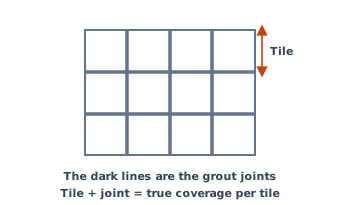
How the grout quantity is calculated
There is no honest one-line formula for grout. Coverage depends on tile size, tile thickness and joint width together. So this calculator uses the manufacturer's own chart: MAPEI's Keracolor S technical data sheet lists the square feet a 25 lb bag covers for each tile size and joint width. For example, 12 × 12 in tiles with a 1/4 in joint: 191 sq ft per bag; the same tiles at 1/8 in: 383 sq ft.
Pounds needed = your area (plus waste allowance) ÷ chart coverage × 25, rounded up to whole bags. Keracolor S comes in 25 lb and 10 lb bags; the calculator scales the chart's per-pound coverage to whichever size you pick. Another brand's own chart is the last word for its product. Only tile sizes that appear in MAPEI's published chart are offered, and the figures are for sanded cement grout. Epoxy and unsanded grouts cover differently, so check their data sheets. The chart's figures also assume the standard tile thickness in MAPEI's table for each size (12 × 12 at 3/8 in thick, 4 × 8 at 1/2 in, 6 × 6 at 1/4 in): a tile thinner than the chart assumes will use slightly less grout than shown.
Still counting tiles? Start with the Tile Calculator, which uses the same measurements.
Sources
The figures behind this calculator come from published manufacturer data and industry standards:
Worked examples
200 sq ft floor, 12 × 12 in tiles
1/4 in joints, 10% waste. MAPEI chart coverage: 191 sq ft per 25 lb bag.
Buy 2 × 25 lb bags
60 sq ft shower walls, 6 × 6 in tiles
1/8 in joints, 10% waste. Chart coverage: 285 sq ft per bag.
Buy 1 × 25 lb bag
1,000 sq ft, 24 × 24 in tiles
3/16 in joints, 10% waste. Chart coverage: 510 sq ft per bag.
Buy 3 × 25 lb bags
Frequently asked questions
How much grout do I need for 100 sq ft of 12×12 tile?
Why does joint width change grout use so much?
Sanded or unsanded grout: does coverage differ?
How much extra grout should I allow?
One bag is open. Can I store the rest?
Related calculators
Tile Calculator
Tiles and boxes to buy, with grout-gap spacing and cutting waste included.
Flooring Calculator
Boxes of laminate or vinyl plank for your room.
Carpet Calculator
Square yards of carpet, allowing for roll width.
Concrete Bag Calculator
How many 40, 60 or 80 lb bags of concrete you need, and what they'll cost.
Estimate disclaimer: results are planning estimates based on standard manufacturer yields and coverage figures. Site conditions, product choice and installation method change actual quantities. Verify before you buy, and follow local building code for structural work. This tool does not replace professional engineering advice.
Use this calculator on your own site
Free to embed. Paste this code where you want the calculator to appear. It carries a small "by Figure My Build" credit link, which is all we ask.