Paver Calculator
One tool for the whole patio build-up: the pavers themselves, the compacted gravel base underneath, and the 1 in bedding sand layer, each in the units it's sold in.
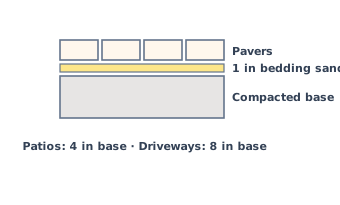
How paver, base and sand quantities are calculated
Pavers are counted by the grid method (the same as our Tile Calculator): each paver takes its size plus one joint (standard pavers are laid with about a 1/8 in sand joint), and partial pavers at the edges count whole. Waste: 5% for a simple rectangle, 10% standard, 15% with curves and diagonal patterns.
Base gravel follows the Interlocking Concrete Pavement Institute's (ICPI) minimums: 4 in of compacted aggregate base for patios and walkways on decent soil (6 in on poor or clay soil), and 8 in for driveways. Tons = area × base depth, converted at 1.4 tons per cubic yard for crushed stone.
Bedding sand is the ICPI-standard 1 in layer of coarse concrete sand screeded over the base (never more than 1.5 in), converted at 1.35 tons per cubic yard. You'll also want a few bags of jointing/polymeric sand to sweep in at the end: roughly a 50 lb bag per 55–120 sq ft with narrow joints; wide joints can drop to 20–45 sq ft per bag, so check the bag's label for your joint width. Ordering the layers separately? The Gravel Calculator and Sand Calculator convert each layer to tons and bags.
Sources
The figures behind this calculator come from published manufacturer data and industry standards:
Worked examples
10 × 12 ft patio, 4 × 8 in pavers
Grid count 525, +10% waste; 4 in base, 1 in bedding.
Buy 578 pavers + 2.1 t gravel + 0.5 t sand
16 × 20 ft driveway, 6 × 6 in pavers
Grid count 1,280, +10% waste; 8 in driveway base.
Buy 1,408 pavers + 11.1 t gravel + 1.4 t sand
8 × 4 ft walkway, 4 × 8 in pavers
Grid count 144, +5% waste; 4 in base.
Buy 152 pavers + 0.6 t gravel + 0.2 t sand
Frequently asked questions
How many pavers do I need for a 10×12 patio?
How deep should the base be under pavers?
How much area does a ton of base gravel cover?
Can I lay pavers directly on sand or soil?
What about edge restraints and polymeric sand?
Related calculators
Gravel Calculator
Tons and cubic yards for driveways and paths.
Mulch Calculator
Bags or cubic yards of mulch by bed area and depth.
Topsoil Calculator
Cubic yards and bags of topsoil for lawns, beds and levelling.
Sand Calculator
Tons of sand for paver base, pools and sandboxes.
Estimate disclaimer: results are planning estimates based on standard manufacturer yields and coverage figures. Site conditions, product choice and installation method change actual quantities. Verify before you buy, and follow local building code for structural work. This tool does not replace professional engineering advice.
Use this calculator on your own site
Free to embed. Paste this code where you want the calculator to appear. It carries a small "by Figure My Build" credit link, which is all we ask.